How to Build a Home Wine Cellar (Without Breaking the Bank)
In this article
Every collector we know started the same way: a few special bottles tucked into the back of a closet, a promise to open them “for an occasion,” and then a slow realization that the closet was too warm, the occasions kept coming, and there was nowhere sensible to put the next case. A home wine cellar does not have to be a vaulted room with stone walls and a tasting table. At its heart, it is simply a place where wine can rest in steady, cool, dark conditions until you are ready to drink it. Here is how we think about building one — at any budget — with a Pacific Northwest collector’s eye.
At a glance
- Ideal temperature: about 55°F (13°C), and above all steady
- Ideal humidity: roughly 60–70%
- Also essential: darkness, minimal vibration, bottles stored on their sides
- Budget options: closet conversions, wine fridges and passive basement storage
- Collecting strategy: plan by drinking windows, buy by the case, track your inventory
- Northwest picks for aging: Willamette Valley Pinot Noir and Chardonnay, Washington Cabernet and Syrah
Why Age Wine — and Which Wines Not To
Before you build anything, it helps to be honest about what a cellar is for. The overwhelming majority of wine made in the world is meant to be enjoyed within a year or two of release. A cellar is not a magic box that improves every bottle; it is a tool for the relatively small number of wines that genuinely get better with time — and for keeping everything else in good condition until you open it.
What happens as wine ages
In a well-made, structured wine, time softens tannins, integrates oak and lets fruit flavors evolve into more complex, savory notes: dried cherry and forest floor in Pinot Noir, leather and cedar in Cabernet, honey and toasted nuts in Chardonnay and Riesling. The wine becomes more harmonious and layered. Wines with good acidity, concentration and, for reds, firm tannins are generally the best candidates.
Wines to drink young
Most rosé, light and aromatic whites such as many Pinot Gris and Sauvignon Blanc, everyday reds, and nearly all wines made for immediate pleasure are at their best while they are fresh. Store them in your cellar if it is convenient, but drink them within a year or two. The joy of these wines is their vibrancy, and time only dulls it.
The Ideal Conditions for Storing Wine
Wine has a few enemies — heat, light, dryness and agitation. A good cellar keeps all of them at bay.
Temperature: cool and, above all, stable
The classic target is around 55°F (13°C). At this temperature, wine ages slowly and gracefully. Warmer storage speeds up aging and can flatten flavors; prolonged heat can “cook” a wine. Even more important than the exact number is consistency. Large, frequent temperature swings cause wine to expand and contract, which can push air past the cork. A cellar that stays at a steady 58°F is better than one that bounces between 50°F and 65°F.
Humidity: protecting the cork
Humidity of roughly 60–70% helps keep natural corks from drying out and letting in oxygen. Too dry, and corks can shrink; too damp, and labels can mold and peel. If you store wine for only a few years, humidity is a lesser concern, but for long-term aging it matters.
Darkness, stillness and position
Ultraviolet light can degrade wine, which is one reason many bottles are made with tinted glass. Keep your cellar dark, and use low-heat LED lighting only when you need it. Minimize vibration from appliances, heavy foot traffic or machinery. Finally, store cork-sealed bottles on their sides so the wine stays in contact with the cork and keeps it moist. Screw-capped bottles can stand upright, but storing them horizontally saves space and keeps things simple.
Your Options: From Closet to Cellar
There is a storage solution for nearly every home and budget. The right choice depends on how many bottles you own, how long you plan to keep them and how much space you can spare.
Wine refrigerators
A dedicated wine fridge — not your kitchen refrigerator, which is too cold and dry for long-term storage — is the easiest entry point. Compressor-based models handle warmer rooms better and generally provide more stable temperatures than thermoelectric units, which are quieter but struggle in warm spaces. Dual-zone fridges let you keep one section at cellar temperature and another at serving temperature for whites. Buy larger than you think you need; collections grow.
Passive storage in a basement
Many homes, especially older houses in the Pacific Northwest, have basements that stay naturally cool year-round. Passive storage — simply racking wine in a cool, dark, stable corner — can work beautifully. Monitor it with a digital thermometer and hygrometer for a full year before you commit; a space that seems cool in winter may warm up considerably in August.
Closet conversions
An interior closet on a lower level can become a small active cellar. The key steps are insulating the walls and ceiling, installing a vapor barrier on the warm side, fitting an exterior-grade, well-sealed door, and adding a cooling unit designed for wine cellars. A standard air conditioner is not a substitute: it is designed to remove humidity and generally is not meant to hold cellar temperatures.
Full custom cellars
At the high end, a dedicated room with professional design, a ducted or split cooling system, custom racking and lighting offers the most capacity and the most beautiful presentation. These projects involve contractors and careful planning, but they can become a centerpiece of the home.
Comparing the options
Costs vary widely by region, size and finishes, so we have used rough tiers rather than prices. Get quotes for anything beyond a freestanding fridge.
| Option | Typical capacity | Cost tier | Pros | Cons |
|---|---|---|---|---|
| Wine refrigerator | Small to medium | Low to medium | Plug-and-play, precise temperature, fits anywhere | Limited capacity, can be noisy, finite lifespan |
| Passive basement storage | Small to large | Low | Little or no energy use, simple racking | Depends entirely on natural conditions; summer warming risk |
| Closet conversion | Medium | Medium | Real cellar conditions in a modest footprint | Requires insulation, vapor barrier, sealed door and cooling unit |
| Freestanding cabinet or modular cellar | Medium to large | Medium to high | Furniture-grade looks, no construction | Bulky, still needs a suitable room |
| Custom cellar room | Large | High | Maximum capacity, design flexibility, long-term value | Professional design and construction, highest investment |
Choosing the Right Racking
Racking determines how many bottles you can store, how easily you can find them and how good your cellar looks.
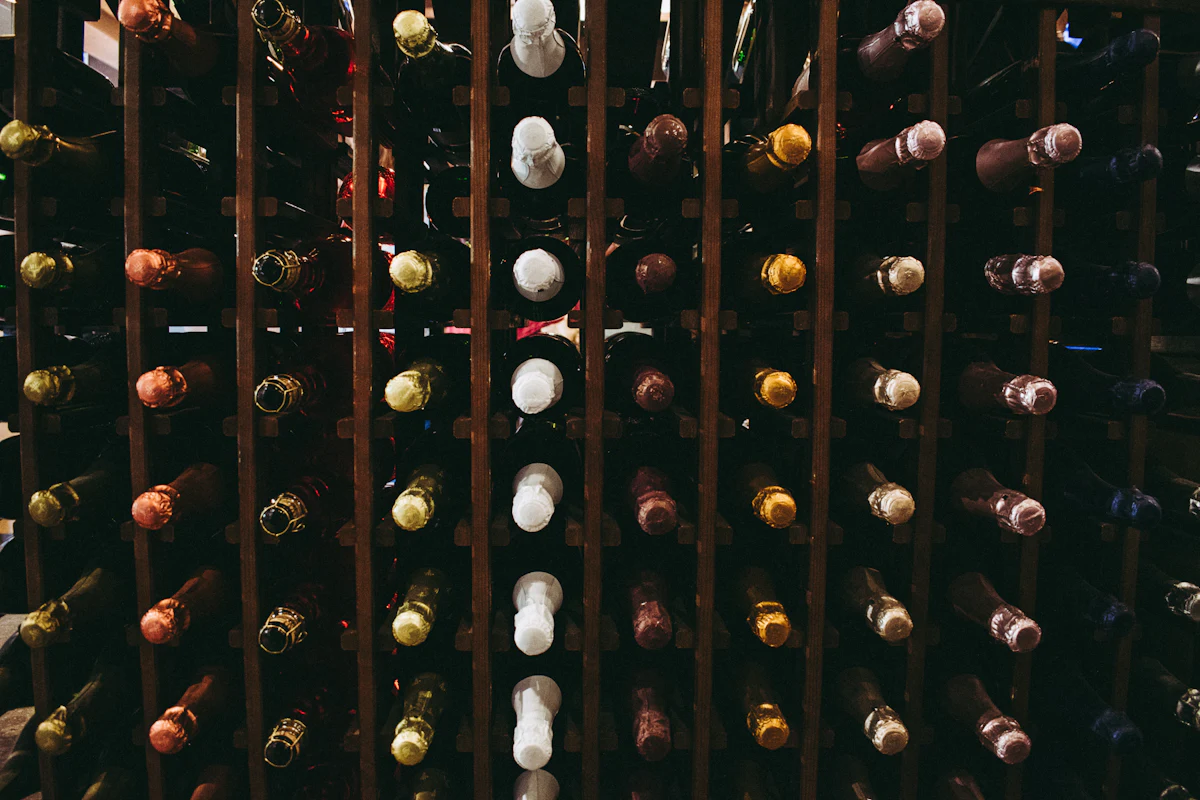
Individual bottle racks
Racks with a slot for each bottle make it easy to locate and remove wines without disturbing others. They work well for diverse collections. Make sure the slots fit wider bottles, such as many Burgundy-style Pinot Noir and Chardonnay bottles, as well as sparkling wine.
Bins and diamond cubes
Diamond-shaped or rectangular bins hold several bottles of the same wine together, which is efficient for multiples and cases. They maximize capacity but make it harder to reach the bottle at the bottom.
Case storage and display racks
Keeping wine in original wooden or cardboard cases is perfectly fine in a stable cellar and can help preserve provenance for valuable bottles. Display racks, which show off labels, are lovely for a few special bottles but use more space.
Materials
Wood racking, often in unstained, rot-resistant species, is classic and adapts well to the cellar’s humidity. Metal racking is modern, slim and strong. Whatever you choose, make sure it is sturdy and secured to the wall — a full rack is very heavy.
Building a Collection with a Plan
The best cellars are not just full of good wine; they are full of the right wine at the right time.
Plan around drinking windows
Every age-worthy wine has a window when it is likely to show its best. When you buy, note the suggested window and think about when you will drink it. Aim for a steady supply of mature wine every year rather than a cellar full of bottles that will all peak at once.
The “rule of thirds”
A simple framework many collectors use: devote roughly a third of your collection to wines for drinking now, a third to wines that will be ready in the next few years and a third to long-term aging. Adjust the proportions to your habits, but the principle keeps you from either drinking everything too young or hoarding bottles you never open.
Buy by the case
Buying a case of a wine you love lets you follow its evolution: open a bottle on arrival, another a few years later and so on. Many retailers offer a discount on full or mixed cases, which helps the budget too.
Verticals and mailing lists
A vertical — several vintages of the same wine — is one of the most rewarding things to collect and taste side by side. Joining winery mailing lists or wine clubs often gives you access to limited releases, library wines and member pricing, and it builds a relationship with producers you admire.
A great cellar is not measured by how much it holds, but by how often it gives you exactly the right bottle at exactly the right moment.
Collecting Ideas for the Pacific Northwest
Our corner of the world is a wonderful place to build a cellar, with world-class wines that age gracefully and producers you can actually visit.
Willamette Valley Pinot Noir
Well-made Willamette Valley Pinot Noir from good vintages can develop beautifully over a decade or more, gaining earthy, savory complexity. Collecting across the valley’s sub-appellations — such as the Dundee Hills, Eola-Amity Hills and Ribbon Ridge — is a delicious way to learn how place shapes the wine. Our Willamette Valley Pinot Noir guide is a good starting point.
Oregon Chardonnay
Oregon Chardonnay has become one of the state’s most exciting categories, with bright acidity and restraint that can carry it gracefully for years. Buy a few bottles from a favorite producer and open them over time to watch them gain texture and nutty complexity.
Washington reds
Washington State’s Cabernet Sauvignon, Merlot, Syrah and Bordeaux-style blends combine ripe fruit with firm structure, and the best can reward long cellaring. They provide a counterpoint to Oregon’s Pinot Noir and round out a Northwest collection.
Something unexpected
Riesling, traditional-method sparkling wine and even some skin-contact whites from the Northwest can age in fascinating directions. Reserve a corner of your cellar for experiments.
Tracking, Insuring and Protecting Your Wine
Once your collection grows past a few dozen bottles, organization becomes essential.
Inventory tracking
Use a spreadsheet, a dedicated cellar app such as CellarTracker, or a simple notebook to record each wine’s producer, vintage, quantity, location, purchase date and drinking window. Tags on bottle necks and a logical rack layout — by region, variety or drinking window — make finding bottles easy. Review your inventory once or twice a year to see what is ready to drink.
Insurance
Standard homeowner’s or renter’s policies may limit coverage for wine collections or exclude certain types of damage, such as spoilage from a power failure. If your collection has significant value, talk to your insurer about a rider or specialized policy. Keep receipts and photos to document what you own.
Provenance
Provenance — the storage history of a bottle — matters, particularly for older or valuable wines. Buying directly from wineries or reputable retailers helps ensure bottles have been stored properly. Be cautious with older wines from unknown sources, and keep records of where and when you bought each bottle.
Serving Wine from Your Cellar
Storing wine well is only half the pleasure; serving it well is the other half.
Decanting
Decanting serves two purposes: aerating young wines to open their aromas and separating older wines from their sediment. Stand older bottles upright for a day or so before opening, then pour slowly into a decanter, stopping when you see sediment reach the neck. Fragile older wines may need only a short time in the decanter, while young, tannic wines can benefit from longer.
Serving temperatures
Serving wine at the right temperature can transform it. These are general ranges — adjust to taste.
| Wine style | Serving temperature |
|---|---|
| Sparkling wine | About 40–50°F (4–10°C) |
| Light, crisp whites and rosé | About 45–50°F (7–10°C) |
| Full-bodied whites (such as oaked Chardonnay) | About 50–55°F (10–13°C) |
| Light reds (such as Pinot Noir) | About 55–60°F (13–16°C) |
| Full-bodied reds (such as Cabernet, Syrah) | About 60–65°F (16–18°C) |
| Dessert and fortified wines | About 50–60°F (10–16°C), depending on style |
Common Mistakes to Avoid
Storage mistakes
- Storing wine on top of the refrigerator, near the stove or in a sunny room
- Using a garage or attic with large seasonal temperature swings
- Keeping wine in the kitchen refrigerator for months
- Standing cork-sealed bottles upright for long periods
- Skipping the year-long temperature check before committing to a passive space
Collecting mistakes
- Buying only wines that need decades, leaving nothing to drink now
- Collecting based on scores rather than your own taste
- Forgetting about bottles until they are past their peak
- Running out of space because you did not plan for growth
Final Thoughts: Start Small, Drink Well
You do not need a grand room or an unlimited budget to cellar wine well. Start with a quality wine fridge or a carefully monitored corner of the basement, buy a few cases of wines you love, keep track of them and open them at the right time. As your collection and confidence grow, you can expand into a closet conversion or a custom cellar. The goal is not to accumulate bottles but to create a steady supply of delicious, mature wine for the moments that matter.
Ready to design a cellar or plan a collection that fits your space, budget and palate? Our cellar consulting service can help you choose storage, organize your inventory and build a Northwest-focused collection you will love to drink.
Frequently asked questions
What is the ideal temperature for storing wine?
Around 55°F (13°C) is the classic target for long-term storage. Stability matters even more than the exact number, so a cellar that holds steady a few degrees warmer is better than one that swings widely between seasons.
Can I store wine in my kitchen refrigerator?
For a few days or weeks, yes, but not for long-term aging. Kitchen refrigerators are colder and drier than ideal and can dry out corks over time, so a dedicated wine fridge or cellar is a better choice.
Is a wine fridge good enough for aging wine?
A quality compressor-based wine fridge can maintain proper cellar temperature and is a good option for small collections. Choose one with enough capacity for future growth and place it away from heat sources and direct sunlight.
Which Northwest wines are best for cellaring?
Well-made Willamette Valley Pinot Noir and Oregon Chardonnay from good vintages can develop beautifully over years, and Washington Cabernet Sauvignon, Syrah and Bordeaux-style blends often have the structure for long aging. Ask producers for their suggested drinking windows to plan when to open each bottle.