Willamette Valley Pinot Noir: The Complete Guide
In this article
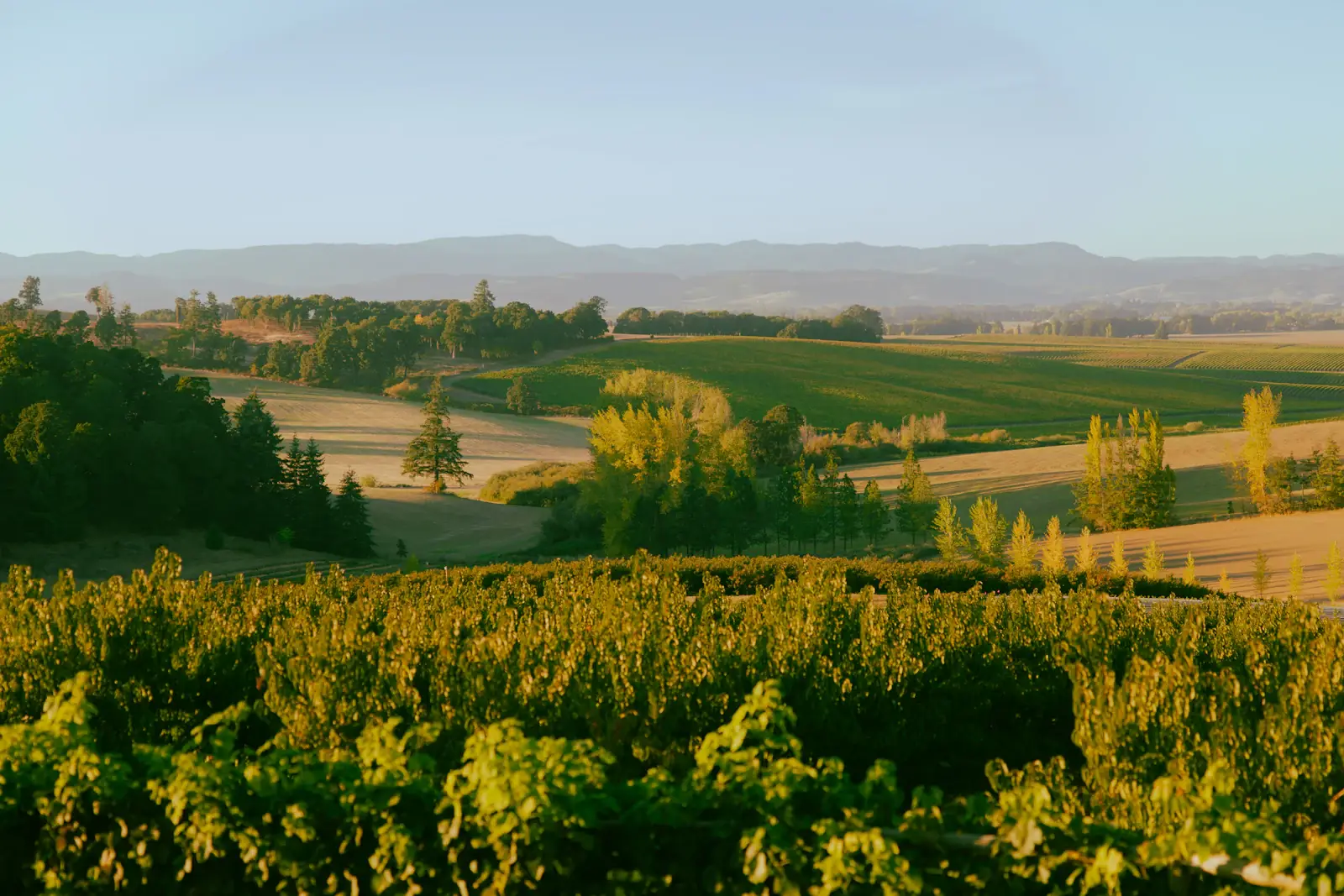
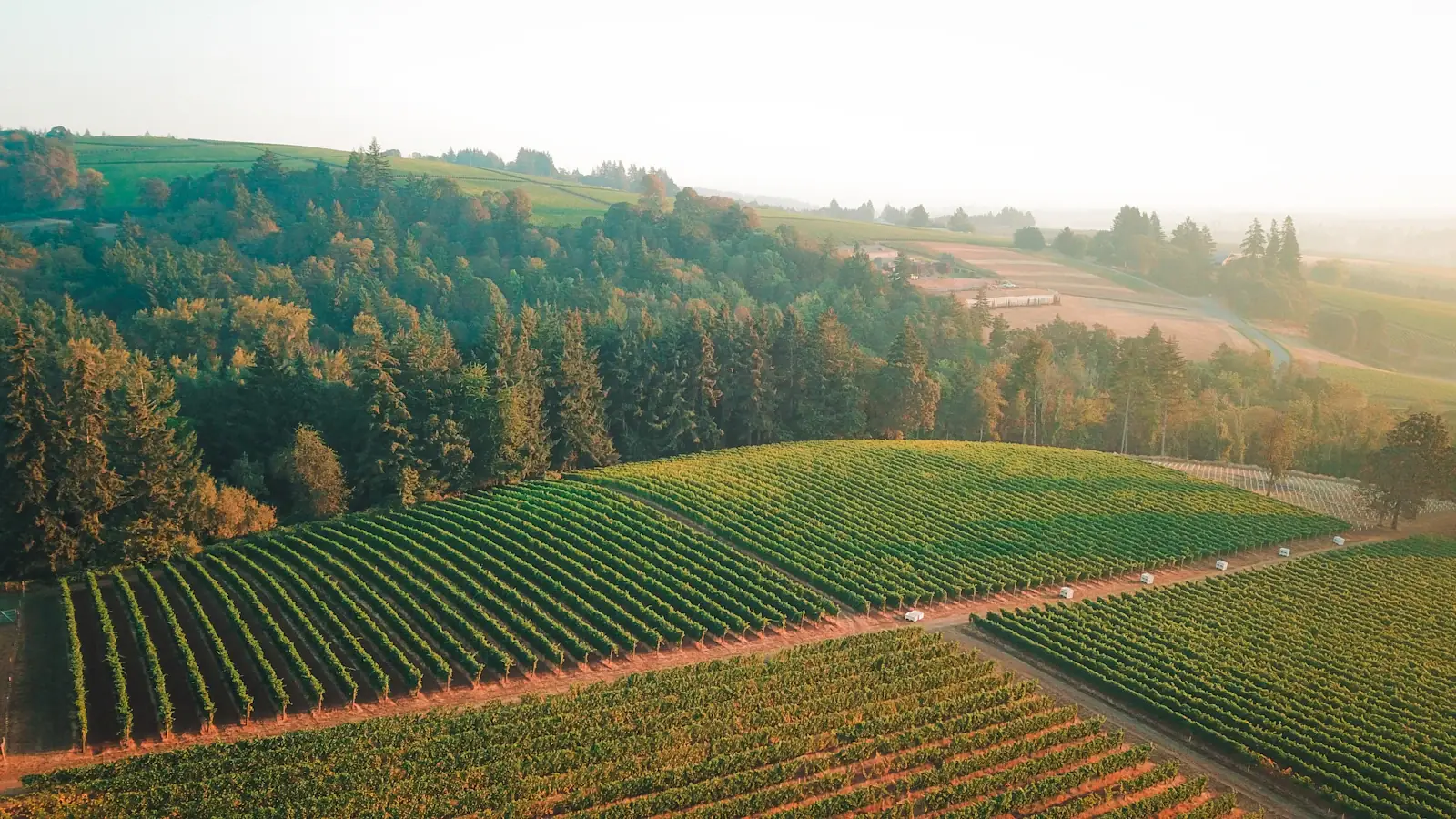
Drive south out of Portland on a clear September morning and the city falls away fast. Within forty minutes the road is threading through hazelnut orchards and Christmas-tree farms, and then the hills begin to rise on your right, striped with vine rows that catch the low sun like corduroy. This is the Willamette Valley, home to roughly two-thirds of Oregon’s wineries and to some of the most compelling Pinot Noir made anywhere outside Burgundy. We have spent the better part of a decade tasting our way through its tasting rooms, cellars and harvest crush pads, and this guide gathers what we have learned: how the land shapes the wine, how the region’s nested appellations differ, where the story began, and how to plan a day of tasting that feels generous rather than rushed.
At a glance
- Where: A broad valley running roughly 150 miles from the Columbia River near Portland south to Eugene, framed by the Coast Range to the west and the Cascades to the east.
- Signature grape: Pinot Noir, followed by Pinot Gris and an increasingly celebrated Chardonnay.
- Key soils: Volcanic Jory, marine sedimentary Willakenzie, and windblown Laurelwood loess.
- Nested AVAs: Eleven sub-appellations, from the Dundee Hills to the newest arrivals such as Lower Long Tom and Mount Pisgah, Polk County, Oregon.
- Best time to visit: Late spring through harvest (September and October), with Memorial Day and Thanksgiving weekends as traditional open-house occasions.
- Getting there: The northern wineries sit 30 to 60 minutes from downtown Portland by car.
Geography and Climate: Why Pinot Noir Thrives Here
Pinot Noir is famously fussy. It wants a long, moderate growing season that lets flavors develop slowly without baking away the acidity that gives the wine its lift. The Willamette Valley sits in a narrow sweet spot, near the 45th parallel, a latitude often compared with the classic wine regions of France.
The Coast Range rain shadow
The single most important feature on the map is the Coast Range, the low, forested mountains that separate the valley from the Pacific. They block much of the ocean’s wet weather, creating a partial rain shadow that keeps the valley drier than the coast while still leaving it far greener than the high desert east of the Cascades. Most of the year’s rain arrives between November and April; summers are typically dry, warm and sunny, which is exactly what a vineyard manager wants during ripening.
Cool nights and long autumns
Even in midsummer, evenings cool off sharply, preserving acidity and aromatic freshness. Autumn tends to be long and gentle, giving growers time to wait for full flavor ripeness. The catch is that the fall rains can arrive early, and every harvest becomes a quiet negotiation with the forecast. That tension is part of what makes Oregon vintages so interesting to follow: no two years taste quite the same.
Ice Age floods and valley floor
The valley floor is built on deep sediments left by the Ice Age Missoula Floods. Those fertile flats grow grass seed and hazelnuts beautifully but are too rich and frost-prone for great wine, so the best vineyards climb the hillsides, where soils are thinner and cold air drains away.
Reading the Soils: Jory, Willakenzie and Laurelwood
Ask any Willamette winemaker what makes their Pinot distinctive and the conversation will turn to dirt within minutes. Three soil families dominate, and learning their signatures is one of the real pleasures of tasting here.
Jory: the red volcanic soil
Jory is a deep, iron-rich, brick-red clay loam formed from ancient basalt lava flows. It is Oregon’s official state soil, and it defines the famous Red Hills of the Dundee Hills as well as much of the Eola-Amity Hills. Pinot Noir grown on Jory often shows red fruit — raspberry, red cherry, cranberry — along with bright acidity, a perfumed, sometimes floral nose and a silky, elegant texture.
Willakenzie: ancient seabed
Willakenzie soils formed from uplifted marine sediments, the remains of an ancient ocean floor. They are typically sandier and faster-draining than Jory, and they are the backbone of Yamhill-Carlton, Ribbon Ridge and parts of the Chehalem Mountains and McMinnville. Wines from these soils tend toward darker fruit — black cherry, blackberry, plum — with more noticeable structure and earthy, sometimes savory undertones.
Laurelwood: windblown loess
Laurelwood soils combine fine, windblown silt (loess) deposited over basalt. You find them on the slopes of the Chehalem Mountains and in the Tualatin Hills, and they are the namesake of the Laurelwood District. Pinot from Laurelwood frequently sits between the other two styles: lifted red and dark fruit, notable spice and a fine, almost chalky tannin that gives the wine a sense of tension.
A Short History of Oregon Pinot Noir
Compared with Burgundy’s thousand-year story, Oregon’s is remarkably young.
The pioneers
In the mid-1960s, conventional wisdom held that the Willamette Valley was too cool and too wet for serious wine grapes. A handful of young growers disagreed. The best known is David Lett, who brought Pinot Noir cuttings to Oregon in 1965 and planted them in the Dundee Hills in 1966, founding The Eyrie Vineyards. Around the same time and in the years that followed, other early growers and families — among them Dick Erath, the Ponzi family, the Adelsheims and the Sokol Blosser family — planted vineyards and started wineries that remain household names in Oregon wine.
Paris and Beaune
The moment that put Oregon on the international map came at the end of the 1970s. At a 1979 competition organized by the French food and wine guide Gault-Millau, an Eyrie South Block Pinot Noir placed among the top Pinot Noirs in a field that included respected Burgundies. Burgundian négociant Robert Drouhin, intrigued, staged a follow-up tasting in Beaune in 1980, where the Eyrie wine again showed very well, finishing just behind one of Drouhin’s own Burgundies. For a region barely fifteen years old, it was a stunning validation.
Oregon did not set out to imitate Burgundy. It set out to grow Pinot Noir honestly in a cool place — and the comparisons followed on their own.
Burgundy comes to Oregon
The Drouhin family eventually did more than taste: in the late 1980s they established Domaine Drouhin Oregon in the Dundee Hills, a vote of confidence that encouraged further investment. The Willamette Valley AVA was formally recognized in 1983, and in the decades since, the number of wineries has grown into the hundreds. Each July, McMinnville hosts the International Pinot Noir Celebration, a gathering we have written about in our IPNC dispatch.
The Nested AVAs and How They Taste
An American Viticultural Area (AVA) is a federally recognized grape-growing region defined by distinctive geography. Within the large Willamette Valley AVA sit eleven smaller, nested appellations, each with its own soils, elevations and weather patterns. Here is a quick tour, roughly north to south.
Tualatin Hills
The northwesternmost of the nested AVAs, west of Portland, the Tualatin Hills are dominated by Laurelwood loess over basalt. Expect focused, energetic Pinot Noir with red fruit and spice, and excellent cool-climate Chardonnay and Riesling.
Chehalem Mountains
A single long ridge southwest of Portland with all three of the valley’s major soil types, the Chehalem Mountains is one of the most geologically diverse appellations in the valley. Styles range widely, but the region is known for balanced Pinot with both red and dark fruit.
Laurelwood District
Carved out of the Chehalem Mountains and named for its signature soil, the Laurelwood District is defined by that windblown loess. Wines often show bright aromatics, savory spice and fine-grained tannin.
Ribbon Ridge
A compact ridge nested within the Chehalem Mountains, Ribbon Ridge is one of the smallest appellations in the state. Its uniform Willakenzie marine soils and sheltered position yield Pinot with dark fruit, dense texture and earthy depth.
Dundee Hills
The historic heart of Oregon Pinot. The Dundee Hills’ red Jory soils produce perfumed, red-fruited, silky wines with lovely aromatic lift. Many of the valley’s most storied estates are here.
Yamhill-Carlton
A horseshoe of foothills around the small towns of Yamhill and Carlton, planted largely on Willakenzie sedimentary soils. The wines tend toward black cherry, blackberry and a plush mid-palate, often with a hint of forest floor.
McMinnville
West and southwest of the town of McMinnville, in the foothills of the Coast Range, this appellation combines marine sediments with basalt. Its Pinot is often deeply colored, firmly structured and dark-fruited, with mineral and savory notes.
Eola-Amity Hills
Northwest of Salem, these volcanic hills face directly into the cool afternoon winds that blow through the Van Duzer Corridor. The result is Pinot and Chardonnay with crunchy acidity, bright red and blue fruit, and real tension.
Van Duzer Corridor
West of the Eola-Amity Hills, this appellation is defined by a low gap in the Coast Range that funnels Pacific air into the valley. The persistent wind encourages thicker grape skins, which can translate into deeper color, more structure and concentrated dark fruit.
Mount Pisgah, Polk County, Oregon
Built around a single prominent hill in Polk County, not far from Salem, this small appellation has shallow soils derived from some of the oldest rock in the valley. It sits in a relatively warm, sheltered pocket, and its Pinot Noir tends to be expressive and generous.
Lower Long Tom
The southernmost of the nested AVAs, between Corvallis and Eugene, Lower Long Tom is planted mainly on shallow, marine-derived clay loams. Its Pinot Noir often shows concentrated, savory fruit, and the area also produces notable Pinot Gris and Chardonnay.
The table below is a simplification — winemaking and vintage matter enormously — but it is a useful starting point.
| AVA | Dominant soils | Typical Pinot Noir style |
|---|---|---|
| Tualatin Hills | Laurelwood loess over basalt | Focused, red-fruited, spicy, energetic |
| Chehalem Mountains | Jory, Willakenzie and Laurelwood | Varied; balanced red and dark fruit |
| Laurelwood District | Laurelwood loess | Aromatic, savory spice, fine tannin |
| Ribbon Ridge | Willakenzie marine sediment | Dark fruit, dense, earthy |
| Dundee Hills | Jory volcanic | Perfumed, red cherry and raspberry, silky |
| Yamhill-Carlton | Willakenzie marine sediment | Black cherry, plush, forest floor |
| McMinnville | Marine sediment with basalt | Deep color, firm structure, mineral |
| Eola-Amity Hills | Volcanic basalt | Bright acidity, red and blue fruit, taut |
| Van Duzer Corridor | Marine sediment | Deeply colored, structured, concentrated |
| Mount Pisgah, Polk County | Shallow soils from ancient rock | Expressive, generous, warm-pocket ripeness |
| Lower Long Tom | Marine-derived clay loam | Concentrated, savory, dark-fruited |
How to Plan a Willamette Valley Tasting Day
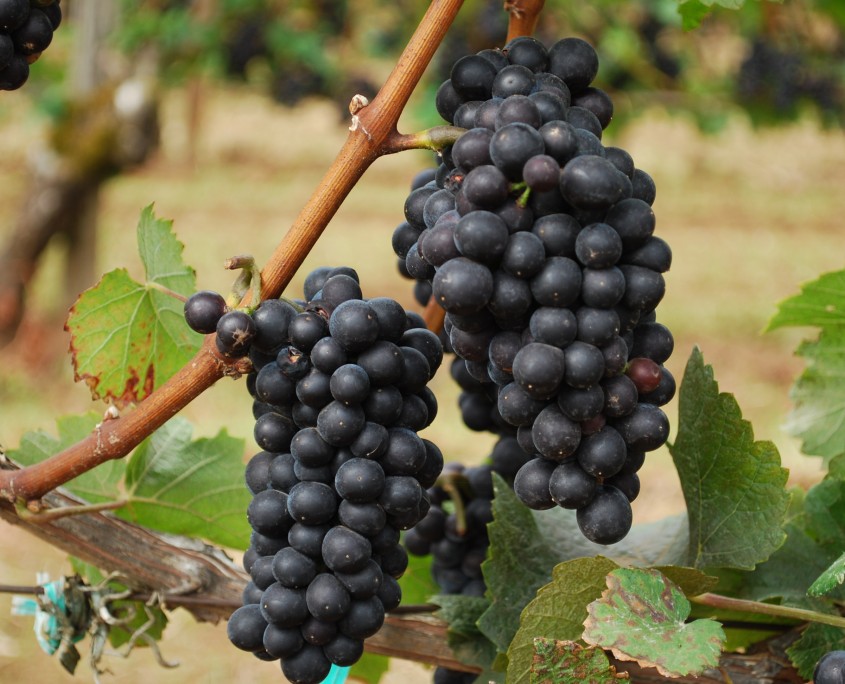
The most common mistake first-time visitors make is trying to see too much. The valley is large, roads are winding, and the best tastings are unhurried conversations, not drive-throughs.
Choose a cluster, not a checklist
Pick one or two neighboring AVAs and stay put. A day in the Dundee Hills with a late stop in Yamhill-Carlton gives you a vivid red-fruit-versus-dark-fruit comparison with minimal driving.
Three or four stops is plenty
We recommend three wineries, four at most. Start around 11 a.m., plan a proper lunch between your second and third stops, and finish before tasting rooms close in the late afternoon. Mix it up: one historic estate, one small family producer, and one winery known for something other than Pinot — Chardonnay, sparkling or Gamay — keeps the palate fresh.
Sort out transportation first
Tasting pours add up quickly on rural two-lane roads. Designate a driver, hire a car service, or join a guided outing. Our own Willamette Valley wine country tours are built around exactly this philosophy: fewer stops, deeper conversations and someone else at the wheel.
Tasting Room Etiquette and Costs
Reservations
Most wineries now prefer or require reservations, especially for seated tastings and on weekends. Walk-ins are sometimes welcome on quieter weekdays, but booking ahead is the safest approach. Larger groups should always call ahead.
Fees
Expect to pay a tasting fee nearly everywhere. Fees vary widely, from relatively modest standing-bar flights to considerably more for seated, reserve or library experiences with food. Many wineries waive or reduce the fee with a bottle purchase or for wine club members. Policies change, so check before you go.
Spitting, pacing and conversation
Spitting is completely acceptable — use the dump bucket without embarrassment. Skip strong perfume, which interferes with everyone’s ability to smell the wine. And ask questions: tasting room staff love talking about their vineyards. If you want to build confidence before your visit, our wine education resources are a good place to start.
The Best Seasons to Visit
Spring (March to May)
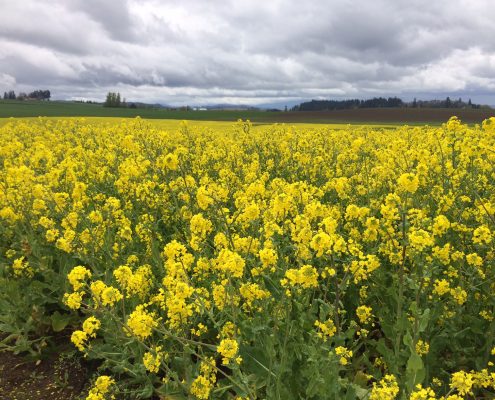
Budbreak and the bright yellow mustard that some growers plant between rows make spring visually stunning. Tasting rooms are quieter, and Memorial Day weekend brings a long-standing tradition of open houses, when many wineries that are rarely open to the public welcome visitors.
Summer (June to August)
Long, dry, golden days make summer ideal for patio tastings. It is also peak season, so book early.
Harvest (September to October)
The most atmospheric time to visit: fruit arriving, the smell of fermentation in the air, winemakers running on adrenaline. Some small producers pause tastings during crush.
Winter (November to February)
Gray and wet, but cozy. Thanksgiving weekend is the valley’s other great open-house tradition, and winter is a lovely time for intimate, fireside tastings. It also coincides with Oregon truffle season — see our truffle guide.
Food Pairings for Willamette Pinot Noir
Pinot Noir’s bright acidity, modest tannin and earthy complexity make it one of the most food-friendly reds in the world.
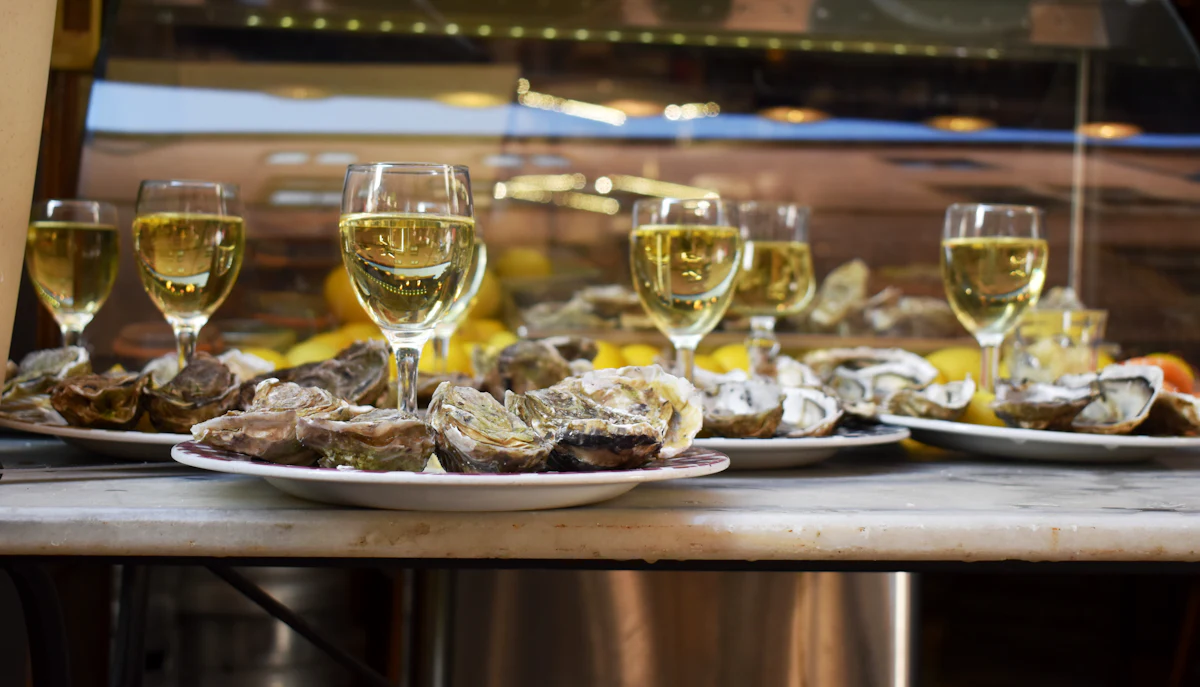
- Salmon: The classic regional pairing. Grilled or cedar-planked wild salmon and a red-fruited Dundee Hills Pinot is a match worth traveling for. Explore more in our guide to pairing Oregon wine with seafood.
- Mushrooms: Chanterelles, morels and other wild mushrooms echo the forest-floor notes in Willakenzie-grown Pinot.
- Duck and game birds: Roast duck with a cherry or berry sauce flatters the darker, more structured styles from McMinnville and Van Duzer Corridor.
- Pork and lamb: Herb-roasted pork loin or lamb chops suit the spice of Laurelwood-grown wines.
How to Buy and Cellar Willamette Valley Pinot
Buying at the winery
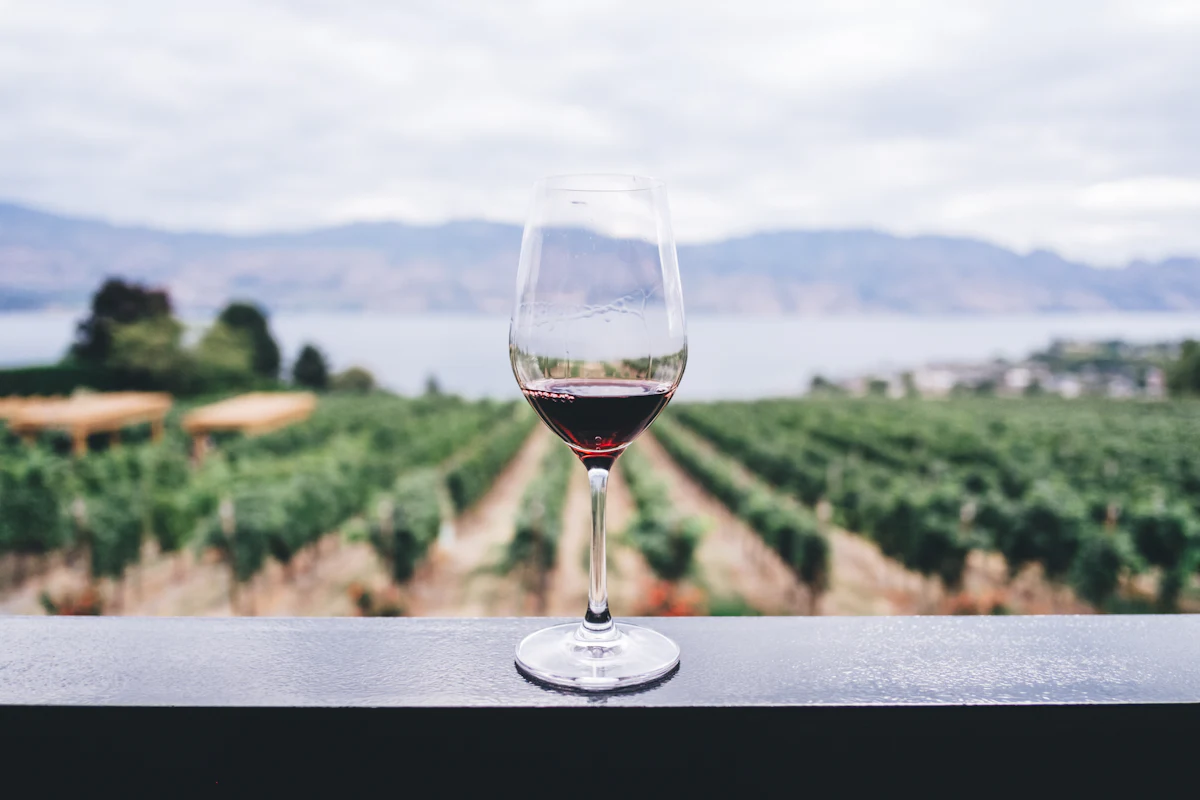
Buying at the winery is often the only way to find small-production, single-vineyard bottlings, and wine clubs bring discounts and limited releases. Shipping rules vary by state, so confirm a winery can ship to you.
Understanding vintages
Because the valley sits at the cool edge of ripening, vintage variation is real. Warmer years tend to produce riper, rounder, more immediately appealing wines; cooler years often give more elegant, higher-acid wines that reward patience. Ask tasting room staff how the current release compares to the previous few years — they will happily tell you.
Aging potential
Most entry-level Willamette Pinot is delicious within a few years of release. Single-vineyard and reserve bottlings from good vintages can develop beautifully for a decade or more. When in doubt, buy several bottles and open one every couple of years.
Storing at home
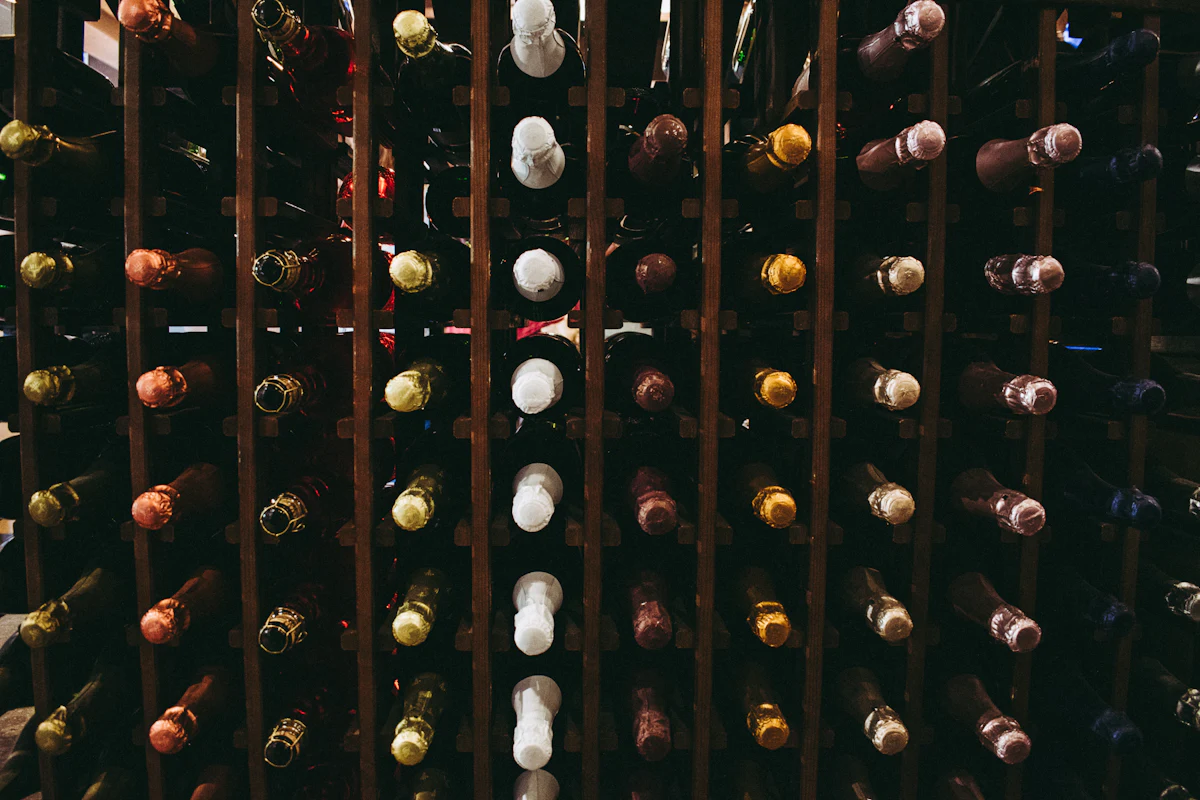
Store bottles on their sides in a dark, cool, stable spot, ideally around 55°F with moderate humidity. Avoid the kitchen and anywhere near a heater. Our home wine cellar guide covers the details, and our cellar consulting service can help you plan a collection.
Final Thoughts
The Willamette Valley rewards curiosity. Taste a Dundee Hills Pinot beside one from Yamhill-Carlton and the difference between volcanic and marine soils becomes something you can actually taste. Visit during harvest and you will see how much of each vintage depends on a few nervous weeks of autumn weather. That sense of a region still discovering itself is exactly what makes it so exciting to explore.
Ready to taste it for yourself? Let us handle the planning, the reservations and the driving on one of our Willamette Valley wine country tours, built around small producers and unhurried conversations.
Frequently asked questions
What makes Willamette Valley Pinot Noir different from other Pinot Noir?
The valley’s cool, long growing season preserves bright acidity and aromatic freshness, while its volcanic, marine sedimentary and windblown soils add distinct fruit and texture profiles. The result is typically elegant, food-friendly Pinot that sits stylistically between riper California examples and leaner Burgundy.
How many wineries should I visit in one day in the Willamette Valley?
Three wineries, four at the very most, is the sweet spot for an enjoyable day. Focus on one or two neighboring AVAs to cut down on driving, build in a real lunch, and arrange a designated driver or guided tour.
Do I need reservations for Willamette Valley tasting rooms?
Most wineries now prefer or require reservations, especially for seated tastings and on weekends. Walk-ins are sometimes possible on quieter weekdays, but policies vary, so check before you go.
How long can I age Willamette Valley Pinot Noir?
Most entry-level bottlings are best within a few years of release. Single-vineyard and reserve wines from strong vintages can improve for a decade or more when stored on their sides in a cool, dark, stable place around 55°F.