Oregon Truffle Season: Hunting, Buying & Cooking Black and White Gold
In this article
Cut into a ripe Oregon white truffle and the room changes. A wave of aroma — garlic and earth, honey and something faintly cheesy — rises from a lump no bigger than a walnut, and suddenly a plate of eggs or a bowl of buttered pasta becomes an event. For years, Oregon’s native truffles lived in the shadow of their famous European cousins, dismissed by people who had only met underripe, raked specimens. That reputation is fading fast. Thanks to trained dogs, dedicated foragers and a growing community of cooks, the Northwest’s black and white truffles are earning their place at the table. Here is our guide to the season: what to look for, how to buy and store truffles, and how to cook them so every gram counts.
At a glance
- Native species: Oregon white truffles (Tuber oregonense and Tuber gibbosum) and the Oregon black truffle (Leucangium carthusianum)
- Habitat: Mostly young Douglas-fir stands west of the Cascades
- Season: Roughly late fall through spring, varying by species
- Best harvest method: Trained dogs, which find only ripe, aromatic truffles
- Storage: Wrapped in paper towel in an airtight jar in the fridge; use within days
- Cook with: Fat — eggs, butter, cream, pasta, risotto — and gentle heat
- Pour: Mature Pinot Noir, Chardonnay or traditional-method sparkling wine
Meet Oregon’s Truffles
Truffles are the underground fruiting bodies of fungi that live in partnership with tree roots. The fungus helps the tree absorb water and nutrients; the tree feeds the fungus sugars. When the truffle ripens, it releases a powerful aroma so that animals will find it, dig it up and spread its spores. That aroma is exactly what makes truffles so prized in the kitchen.
Oregon white truffles
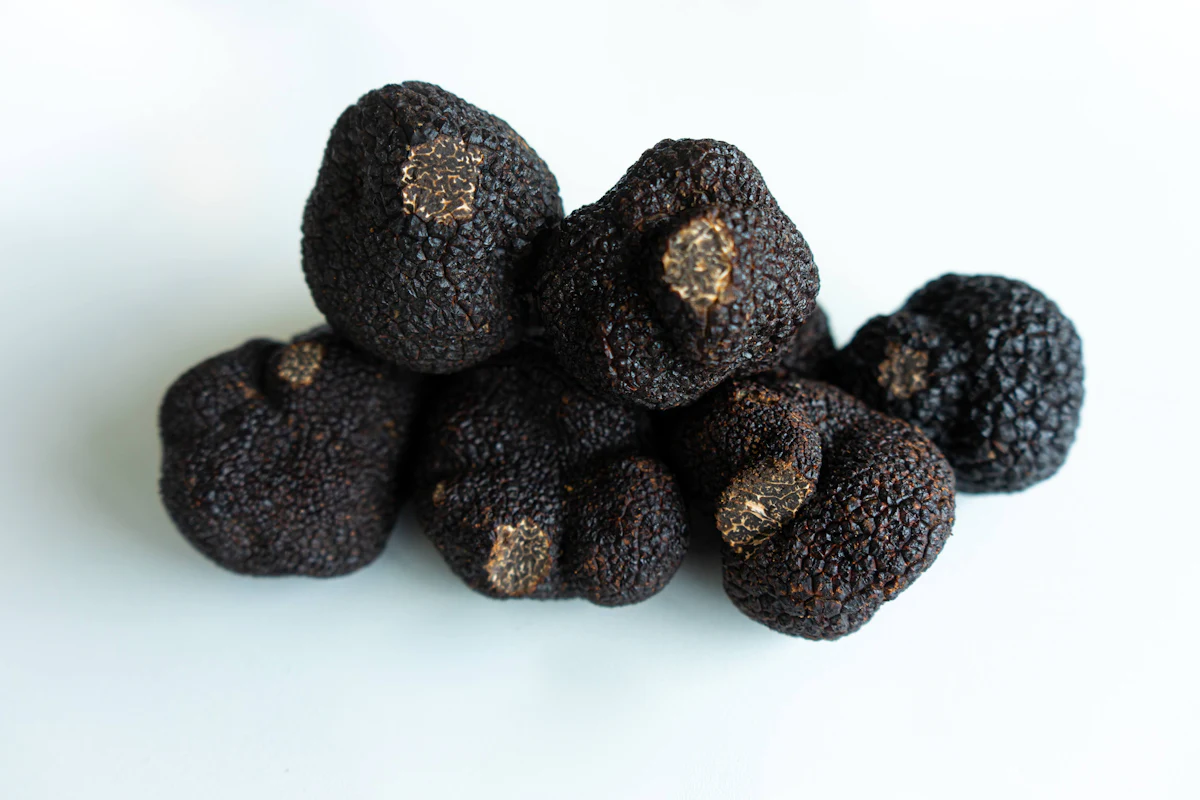
Two native species are sold as Oregon white truffles. Tuber oregonense, sometimes called the Oregon winter white truffle, generally appears from late fall into winter. Tuber gibbosum, the Oregon spring white truffle, typically follows from winter into spring. Both have pale to tan, often lumpy exteriors and marbled interiors, and when ripe they carry a heady, garlicky, earthy perfume. They are not the same species as Italy’s famous white truffle, but at their best they are thrilling in their own right.
The Oregon black truffle
Leucangium carthusianum, the Oregon black truffle, is a different creature altogether. Its aroma is often described as fruity and complex, with notes that people compare to pineapple, tropical fruit or even chocolate and port. That fruity character makes it unusually versatile — it shines in savory dishes but can also be used in desserts, from ice cream to custards.
Other natives and cultivated Périgord truffles
Oregon is also home to the Oregon brown truffle (Kalapuya brunnea) and many other truffle species of less culinary interest. In addition, some growers in Oregon have planted orchards of trees inoculated with the European Périgord black truffle (Tuber melanosporum). These truffle orchards take years to begin producing, and cultivated Périgord truffles grown in the region remain relatively rare, but they are an exciting development to watch.
| Truffle | Scientific name | Approximate season | Aroma | Best uses |
|---|---|---|---|---|
| Oregon winter white | Tuber oregonense | Late fall into winter | Garlicky, earthy, pungent | Eggs, pasta, risotto, butter |
| Oregon spring white | Tuber gibbosum | Winter into spring | Garlicky, earthy, slightly spicy | Eggs, pasta, potatoes, compound butter |
| Oregon black | Leucangium carthusianum | Varies; generally fall through spring | Fruity, complex, sometimes chocolate-like | Savory dishes, cream sauces, desserts |
| Périgord black (cultivated) | Tuber melanosporum | Winter | Deep, earthy, musky | Classic French dishes, sauces, poultry |
Seasons vary from year to year with rainfall and temperature, and individual sites can differ. Treat these windows as rough guides.
Where and When Truffles Grow
Douglas-fir country
Oregon’s native culinary truffles are closely associated with Douglas-fir, the tree that defines so much of the western Oregon landscape. White truffles in particular are often found in younger Douglas-fir stands, including second-growth forests and tree plantations. They grow just beneath the forest floor, sometimes barely covered by needles and duff, in the network of roots where tree and fungus meet.
Why rain matters
Truffle production depends on moisture. The wet months west of the Cascades provide the conditions the fungi need, and a dry fall can delay or reduce the harvest. Because truffles are underground and unpredictable, even experienced foragers can have lean years.
A forest food web
People are latecomers to the truffle feast. In Northwest forests, small mammals such as squirrels, chipmunks and voles eat truffles and scatter their spores through the woods, helping the fungi colonize new roots. Truffles, in turn, help the trees thrive. It is a quiet, underground partnership, and it is one more reason to harvest with a light touch.
Why Trained Dogs Matter
How a truffle is harvested has an enormous effect on its quality. This is the single most important thing to understand about Oregon truffles.
The problem with raking
Historically, many Oregon truffles were harvested by raking the forest floor to expose whatever lay beneath. Raking cannot distinguish ripe truffles from unripe ones, so it brings up many immature specimens with little or no aroma. Those underwhelming truffles reached markets and restaurants and helped give Oregon truffles a poor reputation. Raking also disturbs the forest floor and can damage the delicate fungal network and tree roots that produce future truffles.
The nose knows
Trained truffle dogs solve both problems. A dog locates truffles by scent, and truffles only release strong aroma when they are ripe. The result is a harvest of fully mature, fragrant truffles, gathered with minimal disturbance to the habitat. Many breeds can be trained to hunt truffles; the Lagotto Romagnolo is famous for it, but enthusiastic, food-motivated dogs of many kinds learn the work.
The best Oregon truffles are found by a nose, not a rake — and once you have smelled a ripe one, you will never accept anything less.
Foraging Ethics and the Law
If you are inspired to hunt for truffles yourself, start by learning the rules and respecting the land.
Private land
Always obtain permission before foraging on private land, including tree farms and timberland. Many truffle-producing Douglas-fir stands are privately owned, and harvesting without permission is trespassing and theft.
Public land
Rules for gathering truffles and other forest products on public lands vary by agency and location. Some areas require permits, some prohibit collection and some limit quantities or commercial harvesting. Check with the land manager before you go, and follow the rules that apply.
Responsible harvesting
Dig carefully and only where your dog indicates, refill holes and leave the forest floor as undisturbed as possible. Harvest only ripe truffles and leave some behind so the fungi can spread. Respect wildlife, which depends on truffles as food. If you are new to it, consider learning from an experienced forager or a class; truffle-dog training is a popular activity in Oregon.
The Oregon Truffle Festival
The best way to immerse yourself in truffle season is at the Oregon Truffle Festival, held in the Willamette Valley in winter. The festival brings together chefs, foragers, growers, scientists, dog trainers and food lovers for a mix of dinners, tastings, educational sessions and truffle-dog events. Programming and locations can change from year to year, so check the festival’s official website for current dates, events and tickets before you plan your trip.
What to expect
Depending on the year, festival experiences may include truffle-focused dinners from Northwest chefs, marketplace tastings, seminars on cultivation and cooking, and opportunities to watch truffle dogs at work. Many events sell out in advance, so book early. Pair the festival with a few days of wine tasting in the valley for a memorable winter getaway; see our events calendar for seasonal happenings.

How to Judge and Buy Truffles
Aroma is everything
A ripe truffle smells powerful. Hold it near your nose: it should be pungent and complex, not faint or merely mushroomy. Whites should be garlicky and earthy, blacks fruity and rich. If you have to search for the scent, keep looking.
Texture and appearance
A good truffle feels firm, with only a slight give, like a ripe but firm fruit. Avoid truffles that are soft, slimy, shriveled or moldy. If you can see a cut surface, ripe white truffles typically show marbled interiors with tan to brown tones, while unripe ones tend to look pale and uniform. Still, let aroma be your final guide.
Where to buy
Look for Oregon truffles at specialty food shops, some farmers’ markets during the season, from reputable foragers and at truffle events. Buy only what you can use within a few days. Prices vary with species, quality and the season’s harvest, but Oregon truffles are generally far more affordable than imported European white truffles — one more reason to explore them.
Storing Truffles
Truffles are fleeting. Their aroma begins fading the moment they leave the ground, so treat them as a fresh ingredient and plan to use them quickly.
The best method
Gently brush off any dirt — do not wash truffles until just before using, if at all. Wrap each truffle in a paper towel, place it in an airtight glass jar and refrigerate. Change the paper towel daily, as truffles release moisture. Use them within a few days for the best aroma; quality declines noticeably after about a week.
The rice myth
Storing truffles in rice is a popular idea, but rice draws moisture out of the truffle and can dry it out, while absorbing some of its precious aroma. Paper towel in a sealed jar is a better choice.
Cooking with Oregon Truffles
Fat carries flavor
Truffle aroma compounds dissolve readily into fat, which is why truffles pair so naturally with butter, cream, cheese, eggs and olive oil. Fat captures the aroma and carries it through the dish.
Go gentle on the heat
High heat can drive off truffle aroma. Add truffles at the end of cooking or shave them directly over warm food. Grate some into a dish shortly before serving and shave more on top for both flavor and drama.
Simple dishes, big impact
The best truffle dishes are simple. Try fresh pasta tossed with butter and Parmesan, a creamy risotto, mashed potatoes, a cheese omelet, or popcorn tossed with melted truffle butter. Truffle butter — finely grated truffle mixed into softened butter — is an excellent way to stretch a truffle and preserve its flavor; it freezes well.
A word about truffle oil
Many commercial truffle oils are flavored with synthetic aroma compounds rather than real truffles, and they can taste one-dimensional next to the real thing. Read labels carefully. If you want a truffle-scented fat for later, make your own truffle butter while your truffles are fresh and freeze it in small portions.
Recipe: Oregon truffle scrambled eggs
Oregon truffle scrambled eggs (serves 2)
- 4 large eggs, ideally stored with the truffle for a day or two
- 1 small Oregon white or black truffle (about 10–15 grams)
- 2 tablespoons unsalted butter, divided
- 1 tablespoon crème fraîche or heavy cream
- Flaky sea salt, to taste
- Finely chopped chives, to garnish (optional)
- Toasted bread, to serve
- Crack the eggs into a bowl. Finely grate about half the truffle into the eggs, whisk gently and let rest for 10 to 15 minutes so the aroma infuses.
- Melt 1 tablespoon of butter in a nonstick pan over low heat.
- Add the eggs and stir constantly with a spatula, cooking slowly until they form soft, creamy curds.
- Remove from the heat while still slightly loose. Stir in the remaining butter and the crème fraîche, and season with salt.
- Spoon onto warm plates, shave the remaining truffle over the top, sprinkle with chives and serve with toast.
Wine Pairings for Truffle Season
Truffles and Oregon wine are natural partners, both expressions of the same cool, damp, forested landscape.
Mature Pinot Noir
An aged Willamette Valley Pinot Noir develops earthy, savory notes of forest floor and mushroom that echo the truffle beautifully. Pour one with truffled pasta, risotto or roasted poultry. Our Willamette Valley Pinot Noir guide can help you choose.
Chardonnay
A textured Oregon Chardonnay, particularly one with a few years of age, complements truffles in rich, buttery dishes like scrambled eggs and cream sauces.
Sparkling wine
Traditional-method sparkling wine, with its fine bubbles and toasty notes, cuts through rich truffle dishes and lifts the aroma. It is also a festive choice for truffled popcorn or appetizers.
Final Thoughts: Savor the Season
Oregon truffles are a reminder that some of the world’s great ingredients grow right here, in the Douglas-fir forests beside our vineyards. Seek out dog-harvested truffles, judge them by their aroma, store them carefully and cook them simply. Whether you attend the festival, join a foraging class or simply shave a fresh truffle over your morning eggs, truffle season is one of the most delicious times of the year in the Northwest.
Want to build a winter getaway around truffle season, with dinners, tastings and wine country stops planned for you? Our custom culinary itineraries can bring it all together.
Frequently asked questions
When is Oregon truffle season?
Oregon truffle season runs roughly from late fall through spring, varying by species and by year. Oregon winter white truffles generally appear first, spring whites follow from winter into spring, and Oregon black truffles can be found over a long window depending on conditions.
Why are dog-harvested truffles better?
Trained dogs find truffles by scent, and truffles only give off strong aroma when they are ripe, so dogs bring in mature, fragrant truffles. Raking, by contrast, unearths many unripe truffles with little flavor and disturbs the forest floor that produces future harvests.
How should I store fresh truffles?
Wrap each truffle in a paper towel, seal it in an airtight glass jar and keep it in the refrigerator, changing the towel daily. Use truffles within a few days for the best aroma, and skip storing them in rice, which can dry them out.
What wine goes best with Oregon truffles?
Mature Willamette Valley Pinot Noir is a classic match because its earthy, savory notes echo the truffle. Textured Chardonnay and traditional-method sparkling wine are also excellent, especially with rich dishes like truffled eggs, pasta or risotto.